
A Cable RFQ (Request for Quotation) should include technical drawings, cable assembly specifications, material requirements, order quantities, testing needs, and delivery details. This information helps manufacturers understand your project and prepare an accurate quote. Cables Unlimited works with custom cable assemblies for applications across industries such as communications, medical, military, and robotics. This guide explains what to include in your request, why each detail matters, and how to avoid delays when requesting a cable manufacturing quote. Have a cable project in mind? Request a custom cable quote to get started.
What Is a Cable RFQ, and Why Does It Matter?
A Cable RFQ is a document buyers send to manufacturers to request pricing for cables or cable assemblies based on specific project requirements.
For custom cable manufacturing, a quote depends on more than cable length or quantity. Connector types, materials, electrical requirements, testing, and production volume can all affect pricing.
A well-prepared RFQ helps manufacturers understand what needs to be built, reduces unnecessary questions, and makes it easier to compare quotes from different suppliers.
What Information Does a Cable Manufacturer Need for an RFQ?
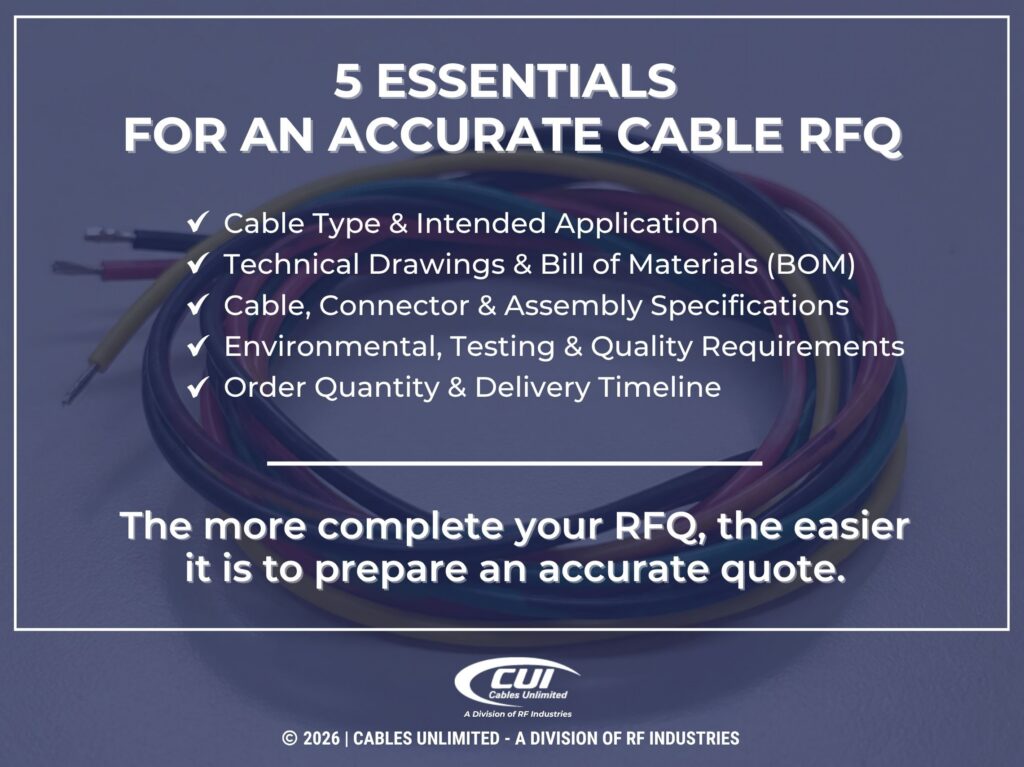
A manufacturer needs enough information to understand the cable’s design, intended use, performance requirements, and production needs. The following details are especially important when preparing a custom cable RFQ.
1. Cable Type and Intended Application
Start by identifying the type of cable assembly you need and where it will be used.
Common examples include:
- Fiber optic cable assemblies: Used for high-speed data transmission and communication systems.
- Wire harnesses: Groups of wires and connectors that carry electrical power or signals.
- Hybrid cables: Combine different cable types, such as power conductors and fiber optics, in a single assembly.
- Coaxial cable assemblies: Used in applications that require controlled signal transmission.
For wire harnesses, include the wire layout, connector positions, branch lengths, and connection details so the manufacturer understands how the assembly should fit and function.
2. Cable Assembly Drawings and Design Details
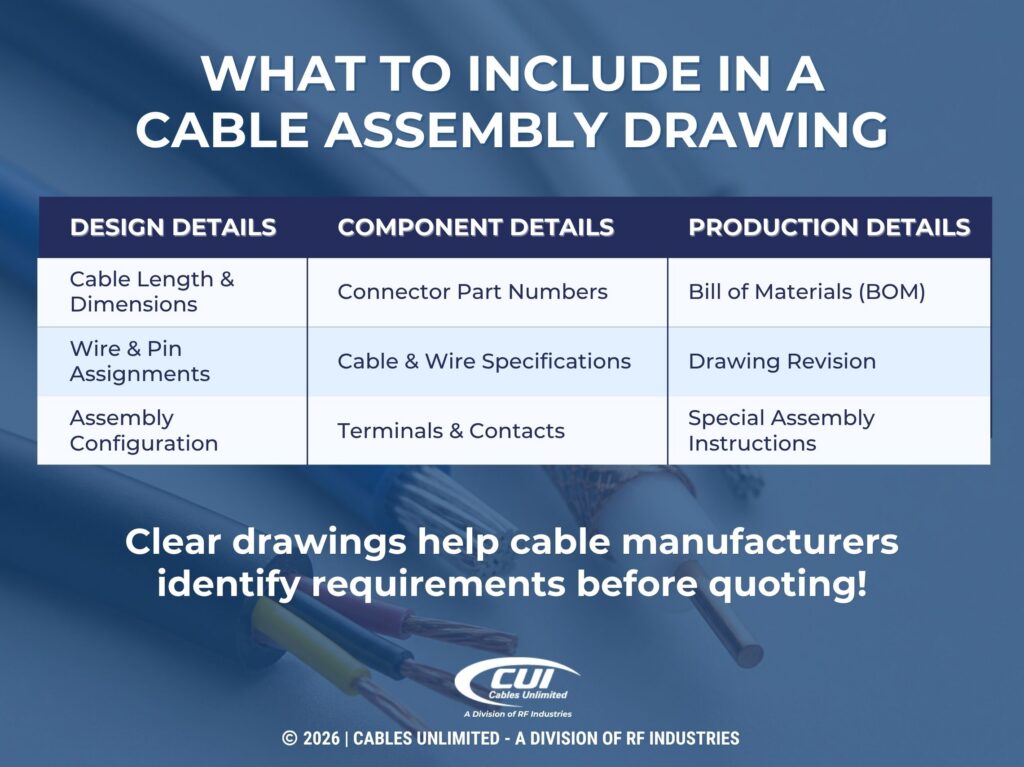
Cable assembly drawings help manufacturers understand how the finished product should look and function.
Include the following documents when available:
- Engineering drawings or CAD files showing dimensions and layout
- Bill of materials (BOM) listing components and part numbers
- Connector types, pinout diagrams, and wire connections
- Cable lengths, dimensional tolerances, and connector orientation
- Drawing revision numbers to identify the latest design
For example, specifying a connector’s exact part number is more useful than simply requesting a cable with a standard connector.
Clear drawings also support the custom cable assembly design process, helping manufacturers review component selection, design requirements, and production details.
3. Cable Assembly Specifications and Materials
Cable assembly specifications define the materials and performance characteristics needed for the finished product.
Depending on the cable type, your RFQ may need to identify:
- Conductor size: American Wire Gauge (AWG) or cross-sectional area
- Conductor material: Copper, tinned copper, or another specified material
- Insulation and jacketing: Materials such as PVC or other suitable compounds
- Shielding: Requirements for reducing electromagnetic interference
- Electrical ratings: Operating voltage, current, and impedance where applicable
- Fiber optic specifications: Fiber type, connector type, and optical performance requirements
These details affect material selection, manufacturing methods, and costs. Recording them in a clear cable specification sheet helps keep engineering and manufacturing requirements consistent.
4. Environmental, Testing, and Quality Requirements
The operating environment can influence cable construction and long-term performance.
Explain whether the assembly will face high temperatures, moisture, chemicals, vibration, repeated bending, or outdoor exposure. For cables used in robotics, include the expected movement, bend radius, and flexing requirements when known.
Your cable manufacturing RFQ should also identify applicable testing and quality requirements.
These may include continuity testing, insulation resistance checks, connector inspections, or optical performance testing, depending on the assembly. Defining these requirements early helps manufacturers account for cable assembly testing when preparing the quote.
If your project requires a particular workmanship standard, such as IPC/WHMA-A-620, specify the applicable revision and acceptance class. Include any customer-specific requirements or documentation that must accompany the finished assemblies.
5. Order Quantity and Delivery Details
Manufacturers also need commercial information to prepare realistic pricing and production schedules.
Provide:
- Initial order quantity or prototype requirements
- Estimated annual production volume, if available
- Requested delivery date
- Shipping destination within the USA
- Special packaging or labeling requirements
For example, requesting 20 prototype assemblies may involve different pricing considerations than ordering 2,000 production units.
Material availability, design complexity, and testing can influence custom cable assembly lead times. Sharing your delivery requirements helps manufacturers assess production schedules and potential constraints.
Can You Request a Custom Cable Quote Without Drawings?
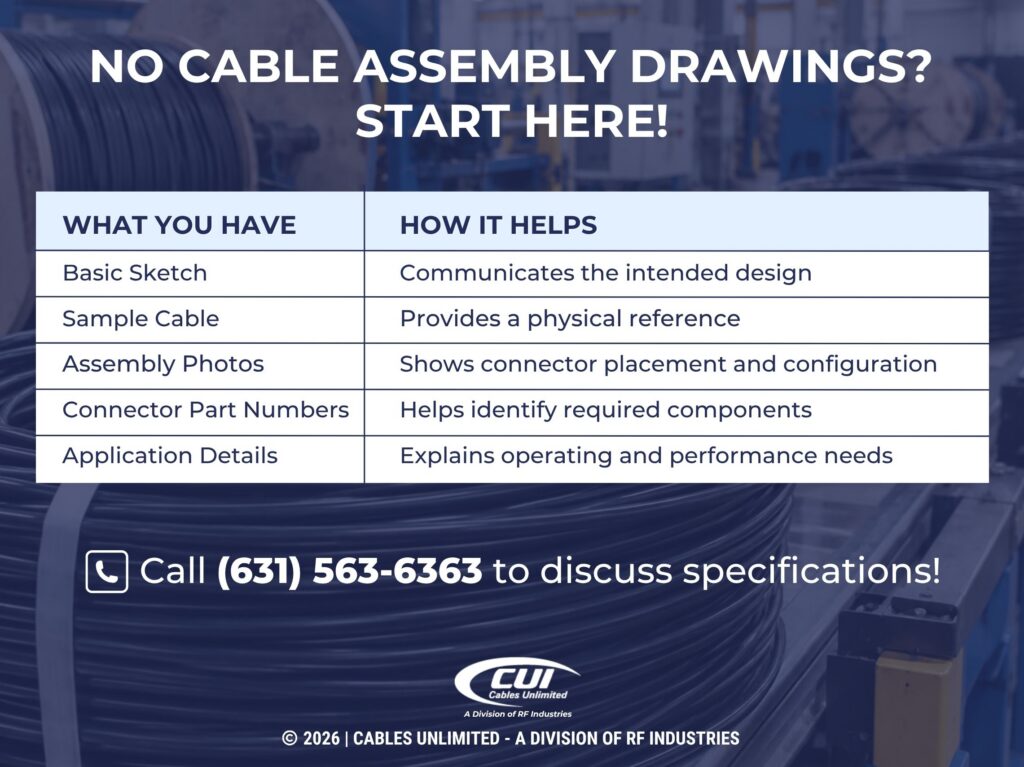
You can begin a quotation inquiry without complete engineering drawings, although the manufacturer may need additional information before providing firm pricing.
If detailed drawings are unavailable, consider sharing:
- A basic sketch showing the cable layout
- Photos of an existing assembly
- A sample cable or relevant part numbers
- A description of the required connections and operating conditions
These materials can help explain your project and identify missing specifications.
However, preliminary pricing may depend on assumptions that need confirmation before production.
When contacting Cables Unlimited, clearly identify which specifications are complete and which still require discussion.
Common Cable RFQ Mistakes to Avoid
An incomplete RFQ can create confusion and lead to quotation revisions.
Common mistakes include:
- Missing drawings: Without clear dimensions or connections, manufacturers may need further clarification.
- Incorrect part numbers: Unclear connector details can affect material selection and pricing.
- Incomplete specifications: Missing electrical or environmental requirements can change the proposed cable construction.
- Unspecified quantities: Without production volumes, accurate unit pricing becomes harder.
- Missing testing requirements: Additional inspections or documentation can affect both cost and delivery.
Reviewing these details before submission helps keep the quotation process straightforward.
Cable RFQ Checklist Before You Submit Your Request
Use this checklist to confirm the information needed for a cable assembly quote.
| RFQ Requirement | Information to Include |
| Cable type | Fiber optic, wire harness, hybrid, or other assembly |
| Application | Intended equipment and operating environment |
| Drawings | Assembly diagrams, BOM, pinouts, and revisions |
| Specifications | Cable length, conductors, connectors, and materials |
| Performance | Electrical, optical, and mechanical requirements |
| Quality | Applicable standards, testing, and inspection needs |
| Quantity | Prototype order, production quantity, and annual demand |
| Delivery | Required date, destination, and packaging |
If some information is unavailable, note it clearly so the manufacturer understands what still needs to be confirmed.
Request a Cable Assembly Quote From Cables Unlimited
A complete RFQ gives manufacturers a clearer understanding of your project and helps you receive pricing based on the right specifications.
Whether you need fiber optic assemblies, wire harnesses, or hybrid cables, preparing the relevant drawings, technical requirements, and order details is a useful first step.
If you’re looking for a U.S. cable manufacturer, Cables Unlimited can be contacted about your custom cable requirements.
Ready to discuss your project? Request a custom cable quote from Cables Unlimited and provide your drawings, specifications, quantities, and delivery requirements.


