

A cable spec sheet explains the design, performance, and safety details of a cable. Buyers and engineers review it to confirm a cable will work correctly before ordering. When comparing products from different cable manufacturers in the USA, the spec sheet helps prevent choosing the wrong cable. This guide explains the key parts of a cable spec sheet in simple terms. If you need help reviewing specifications or selecting custom cable assemblies or fiber optic cable assemblies, the team at Cables Unlimited can help. Contact Cables Unlimited for expert guidance.
What Is a Cable Spec Sheet and Why It Matters
A cable spec sheet provides technical information about a specific cable product, including its construction, electrical performance, and safe operating conditions. Engineers and purchasing teams review this document before approving a cable for a project.
Spec sheets help buyers confirm that a cable meets the electrical and environmental needs of their system, especially when comparing products from multiple suppliers.
They are commonly used when selecting industrial cables, custom cable assemblies, and fiber optic cable assemblies. The information helps buyers verify equipment compatibility and confirm that the cable meets industry standards in the USA.
Carefully reviewing a cable spec sheet helps prevent performance issues, safety risks, and installation problems.

Important Electrical Specifications Buyers Should Check
Electrical specifications in a cable spec sheet explain how the cable performs when transmitting power or signals. These details help buyers confirm that the cable can safely operate within their system.
Key electrical information usually includes:
- Voltage rating: The maximum voltage the cable can handle during normal operation.
- Current capacity: The amount of electrical current the conductor can carry without overheating.
- Resistance and impedance: Values that affect signal quality in communication and control systems.
- Fiber optic cable specifications: These may include signal attenuation, bandwidth capability, and supported wavelengths, which determine how efficiently data travels through fiber optic cable assemblies. For a deeper understanding of terminology, see our fiber optic cable terms and this fiber optic patch cable guide.
Industries such as telecommunications, robotics, and medical technology rely on these electrical specifications to select reliable cables.
Mechanical Specifications Buyers Should Understand
Mechanical specifications in a cable spec sheet describe the cable’s physical structure and its behavior during installation and operation.
Key mechanical specifications include:
- Cable diameter: Helps determine if the cable fits within conduits, trays, or equipment ports.
- Minimum bend radius: Shows how tightly a cable can be bent without damaging conductors or internal fibers.
- Tensile strength: Indicates how much pulling force the cable can withstand during installation.
- Cable weight: Helps engineers plan routing and support structures in larger installations.
These details are especially important when designing custom cable assemblies used in robotics, automation systems, or moving equipment, such as modern robotics cable assemblies.
Materials and Construction Details in a Cable Spec Sheet
A cable spec sheet also lists the materials used in the cable because they affect durability and temperature resistance. It usually identifies the conductor material, such as copper or aluminum, along with insulation types like PVC, XLPE, or LSZH. Many spec sheets also describe shielding or protective jackets that reduce interference and protect the cable. Learn more about advanced shielded cable solutions used in demanding environments. These material details are important when selecting fiber optic cable assemblies for high‑speed communication networks.

Certifications and Compliance Information
Reliable cable spec sheets include certifications that confirm the cable has passed safety and performance testing. One of the most recognized approvals is UL-listed cable certification, which verifies that the cable meets strict electrical safety requirements. Spec sheets may also reference ISO standards and RoHS compliance. Many cable manufacturers in the USA follow these requirements to ensure reliable performance. At Cables Unlimited, we design cable solutions that meet these standards and help customers select dependable cables.
How to Compare Cable Spec Sheets from Different Manufacturers
When evaluating cables from multiple suppliers, buyers should review key sections of the cable spec sheet to ensure the product meets their requirements.
Important factors to compare include:
- Electrical performance: Check voltage ratings, current capacity, and signal performance.
- Mechanical durability: Review bend radius, tensile strength, and cable diameter for installation reliability.
- Materials and construction: Compare conductor materials, insulation types, and shielding.
- Environmental ratings and certifications: Confirm safety approvals and compliance standards.
Comparing these details helps buyers identify reliable options when reviewing products from different cable manufacturers in the US.
Common Mistakes Buyers Make When Reading a Cable Spec Sheet
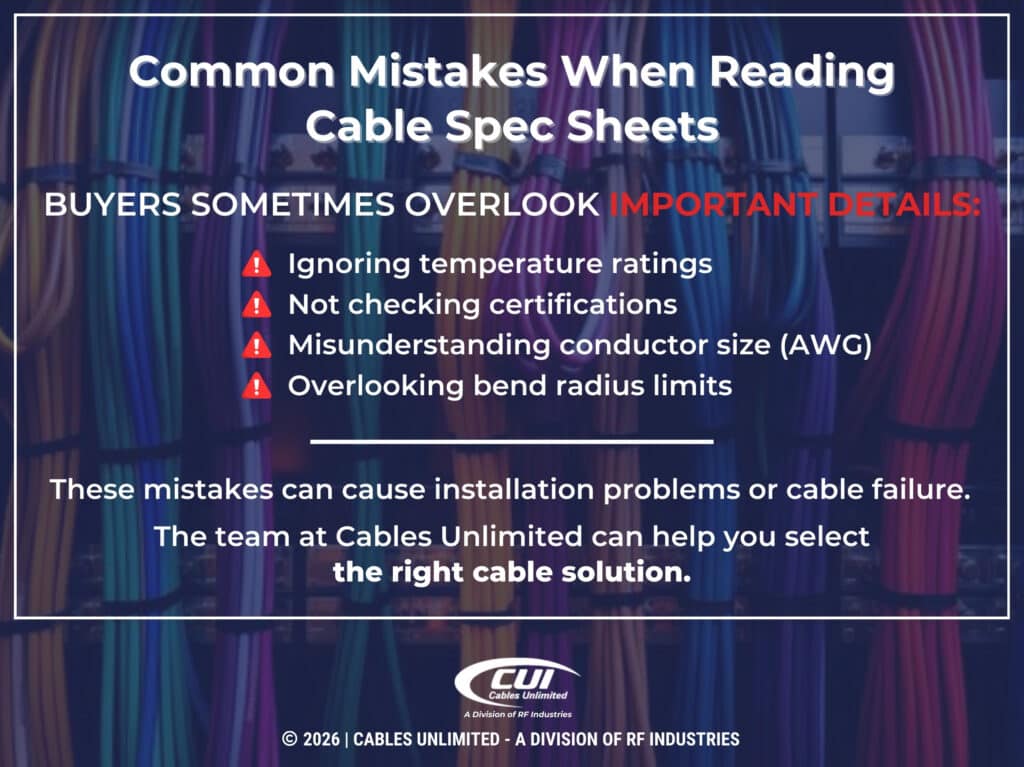
Buyers sometimes overlook important technical details when reviewing a cable spec sheet. Understanding the most common mistakes can help prevent performance issues and installation problems.
Common mistakes include:
- Ignoring temperature ratings: A cable may work electrically but fail if it operates outside its approved temperature range.
- Not checking certifications: Without proper approvals, the cable may not meet safety requirements.
- Misunderstanding AWG or conductor size: This can lead to selecting a cable that cannot handle the required current.
- Overlooking installation limits: Bend radius and tensile strength are critical to prevent cable damage during installation.

Choosing the Right Cable for Your Application
Selecting the correct cable requires reviewing several sections of the cable spec sheet together. It is also helpful to understand the differences outlined in this guide between wire harnesses and cable assemblies. Buyers should evaluate electrical requirements, installation conditions, environmental exposure, and overall system compatibility before making a final decision. Working with experienced cable manufacturers in the USA can also help simplify this process. At Cables Unlimited, our team helps customers review specifications and choose reliable cable solutions that match their application requirements.
Final Tips for Selecting the Right Cable
A cable spec sheet outlines the key details needed to evaluate cable performance, materials, and safety before purchasing. Reviewing specs and certifications helps buyers choose cables that match their system needs. This is especially important when selecting custom cable assemblies or fiber optic cable assemblies. At Cables Unlimited, our team helps customers review cable spec sheet details and select the right solution. Contact us if you need help interpreting fiber optic cable specifications.


