
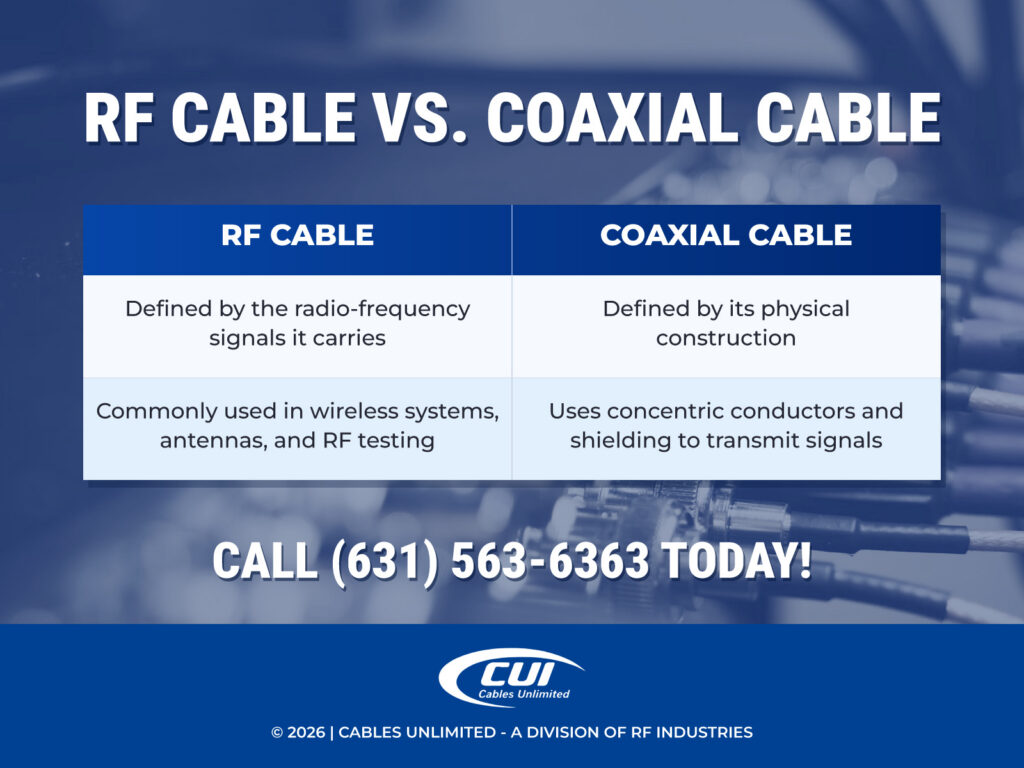
RF cable vs. coaxial cable is a comparison that often causes confusion because the terms describe different things. RF refers to radio-frequency signals, while coaxial describes a cable’s physical construction. Most RF cables use coaxial construction, meaning the two terms often refer to the same cable.
The difference matters when choosing cables for wireless systems, antennas, and communication equipment. Cables Unlimited, a USA-based cable manufacturer, explains how these cables work, where they are used, and which specifications matter when selecting the right assembly. Contact Cables Unlimited to discuss your cable requirements.
What Is an RF Cable?
An RF (radio frequency) cable carries high-frequency electrical signals between electronic devices. These signals are used in wireless communication, radio transmitters, antennas, telecommunications equipment, and testing systems.
Most RF cables use shielded coaxial construction to help reduce signal loss and interference. However, RF refers to the type of signal being transmitted rather than to a specific cable design.
An RF cable’s performance depends on its operating frequency, impedance, length, and construction. These factors help determine whether it can transmit signals effectively within a particular system.
What Is a Coaxial Cable?
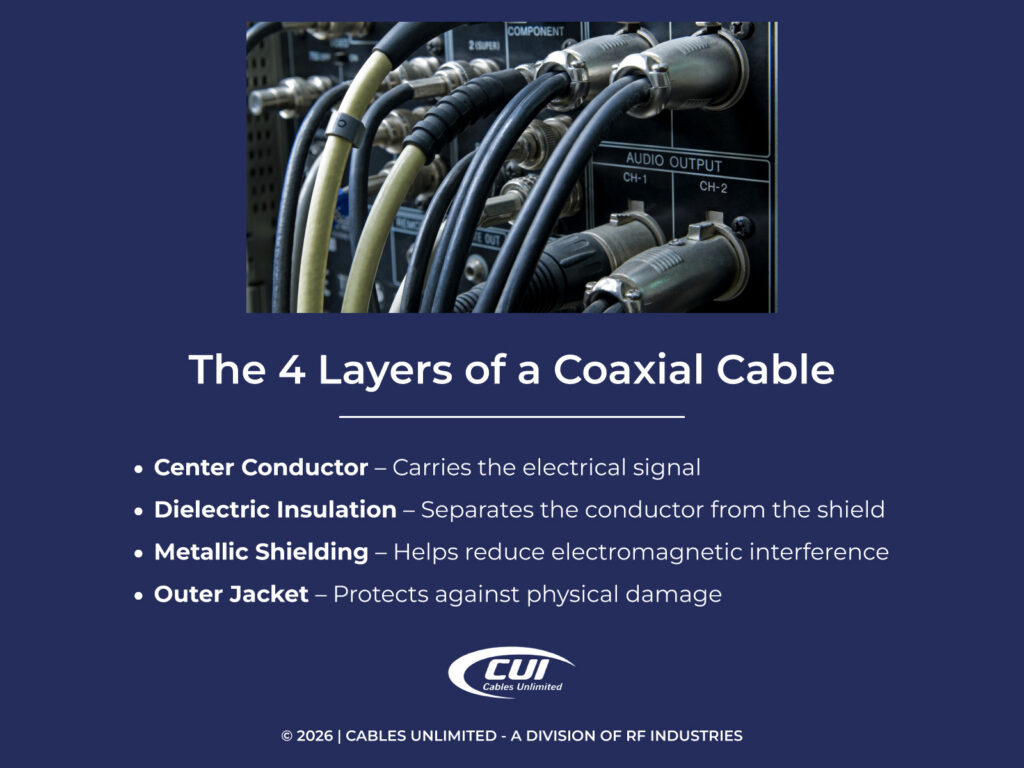
A coaxial cable is an electrical cable consisting of two conductors that share the same central axis. Its construction includes four main parts:
- Center conductor: Carries the electrical signal.
- Dielectric insulation: Separates the inner and outer conductors.
- Metallic shielding: Helps prevent electromagnetic interference (EMI).
- Outer jacket: Protects the cable from physical damage.
This structure helps guide signals while limiting interference from nearby equipment.
Coaxial cables are widely used for television, broadband internet, radio communication, and antenna connections. Their performance depends on the cable’s materials, impedance, shielding, and operating frequency.
RF Cable vs. Coaxial Cable: Key Differences
The main difference between RF and coaxial cable is how each term is defined. RF describes a cable’s intended signal application, while coaxial describes its construction.
Many RF cables are coaxial, but not every coaxial cable is designed for the same frequency range or performance requirements.
| Feature | RF Cable | Coaxial Cable |
| Meaning | Describes signal purpose | Describes cable construction |
| Design | Commonly uses coaxial construction | Has concentric conductors |
| Applications | Antennas, wireless systems, RF testing | RF, television, broadband, video |
| Impedance | Commonly 50 or 75 ohms | Depends on cable design |
| Selection | Based on RF system requirements | Based on electrical and physical specifications |
Does this mean RF and coaxial cables are interchangeable?
Not always. A coaxial cable may physically connect two devices but still have unsuitable impedance, excessive signal loss, or connectors that don’t meet the system’s requirements.
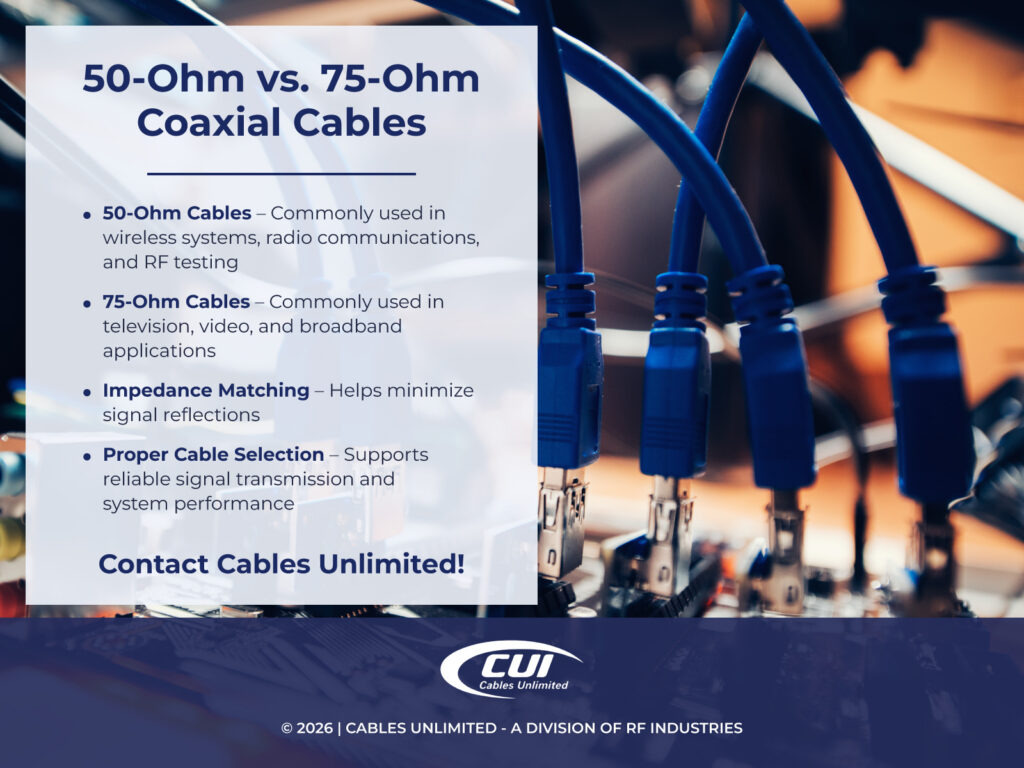
For example, a 75-ohm television cable should not automatically be used to replace a 50-ohm cable in radio equipment. Impedance mismatches can cause signal reflections and reduce performance.
Common RF Cable Types and Connectors
Different RF cable types are designed for particular signal and installation requirements.
Types of RF Cables
- RG-58: Commonly a 50-ohm cable used in radio equipment and short RF connections.
- RG-6: Usually a 75-ohm cable used for television, broadband, and antenna systems.
- Low-loss RF cables: Designed to reduce attenuation, particularly at higher frequencies or over longer distances.
Cables Unlimited also offers coax cable assemblies, including flexible, semi-rigid, and low-loss options for wireless infrastructure.
Common RF Cable Connectors
RF cable connectors provide the connection between a cable and electronic equipment.
SMA connectors are common in compact RF devices, BNC connectors in testing and video equipment, N-type connectors in antenna systems, and F-type connectors in television and broadband connections.
Connector impedance, frequency rating, and physical compatibility must match the application.
How to Choose the Right RF or Coaxial Cable
Choosing between RF cable vs coaxial cable labels matters less than checking the cable’s technical specifications.
Consider these four factors:
- Impedance: Match the cable to the equipment’s 50-ohm or 75-ohm requirements. Analog Devices explains impedance matching and how mismatches cause signal reflections.
- Frequency and length: Higher frequencies and longer cable runs generally increase attenuation.
- Shielding: Choose suitable shielding to reduce electromagnetic interference. Read more about shielded cable solutions.
- Connectors and installation: Check connector compatibility, cable flexibility, bend radius, and environmental exposure.
Reviewing a cable specification sheet can help confirm these requirements before purchasing.
When Are Custom RF Cable Assemblies Needed?
Custom RF cable assemblies are useful when standard cables cannot meet specific requirements for length, connectors, shielding, routing, or environmental protection.
For example, wireless infrastructure may require low-loss assemblies with suitable connectors and protection against outdoor conditions.
Working with an experienced RF cable assembly manufacturer helps buyers match cable specifications to their equipment and installation needs.
Cables Unlimited supports custom cable manufacturing in the USA. Learn more about its cable assembly customization process.
Find the Right Cable Solution with Cables Unlimited
RF describes signal use; coaxial describes cable construction. Choosing the right assembly means matching both design and performance requirements.
Need help with your project? Request a quote from Cables Unlimited to discuss your cable specifications.
Frequently Asked Questions
Q. Is an RF Cable the Same as a Coaxial Cable?
Not exactly. RF refers to the signal a cable carries, while coaxial refers to its construction. Most RF cables use coaxial designs.
Q. Can You Use a Coaxial Cable for RF Signals?
Yes. Coaxial cables carry RF signals when their frequency rating, impedance, and power handling match the equipment’s requirements.
Q. What Is the Difference Between 50-Ohm and 75-Ohm RF Cables?
50-ohm cables are commonly used in radio and wireless systems, while 75-ohm cables are typically used for television, video, and broadband.
Q. What Are the Most Common Types of RF Cables and Connectors?
Common RF cable types include RG-58, RG-6, and low-loss coaxial cables. Popular RF cable connectors include SMA, BNC, N-type, and F-type.
Q. When Should You Choose Custom RF Cable Assemblies?
Choose custom RF cable assemblies when standard cables cannot meet your required length, connector, shielding, or installation specifications.


